 blog
7 Roomy Tents for a Family of Five That Actually Fit in 2026
Last Updated: November 21, 2026
Quick Summary
A roomy tent for a family of five should be a six- or eight-person model with at least 100 square feet of floor area, since listed capacity assumes bodies on bare floor with no gear. Look for a peak height near 6 feet and a waterproof fly with taped seams.
- Listed capacity counts bodies on bare floor, so realistic capacity is one or two people fewer.
- Two adults and three kids need near 100 square feet minimum, closer to 120 for comfort.
- A room divider splits the interior into sleeping and gear zones but is fabric, not a wall.
- Cabin tents offer the most standing room, while dome tents trade headroom for wind stability.
- Family tents commonly weigh 20 to 30 pounds for a dome and 30 to 45 for a cabin.
Table of Contents
- Why Most Five-Person Tents Are Too Small for a Family of Five
- Tent Size for Five People: Dimensions, Floor Area, and Peak Height
- 5 Person Tent With Rooms: Layouts That Keep Kids and Gear Separate
- 5 Person Tent Waterproof: Rainfly, Seams, and Wind Resistance
- Large Camping Tents With Rooms: Cabin, Dome, and Inflatable Options
- Packed Size, Weight, and Transport for Car Camping
- Ventilation, Condensation, and Hot-Weather Comfort
- Choosing Your Roomy Family Tent at Get Camping Store
- Frequently Asked Questions
Why Most Five-Person Tents Are Too Small for a Family of Five
A roomy tent for a family of five is not a five-person tent. That is the first thing to understand before you spend money, and it is a common mistake for families shopping for their first big tent.
Listed capacity assumes everyone sleeps shoulder to shoulder on bare floor with no gear. Real families bring duffels, coolers, pillows, a camp cot, and a dog. The number on the box is a legal maximum, not a comfort target.
Realistic Sleeping Capacity vs. Listed Capacity
- Listed capacity = bodies on bare floor, packed tight, no gear
- Realistic capacity = listed capacity minus one or two people
- Comfort capacity = what you actually want on a rainy day with kids inside
For two adults and three children, that math points to a six- or eight-person tent. A true five-person model works only if the kids are small, sleep in one row, and gear stays outside.
Watch out: buying exactly five-person capacity because the number matches your family size is a common reason families find a tent too cramped after the first trip.
Tent Size for Five People: Dimensions, Floor Area, and Peak Height
A comfortable tent size for five people depends on how much floor area your sleeping pads, bags, and gear require, so compare the floor dimensions on each product listing.
Square footage is the number to compare, not the capacity label. A tent that sleeps six might offer 90 square feet; another sleeps eight and offers 130, giving each child real sleeping area and room for bags.
How Much Floor Area Two Adults and Three Kids Really Need
Do rough math before you shop:
- Each adult sleeping pad: about 20 square feet
- Each child sleeping bag: about 12 to 15 square feet
- Gear, bags, and shoes: 15 to 25 square feet total
That lands near 100 square feet minimum, and closer to 120 for comfortable movement. Peak height matters too: a center height around 6 feet lets adults stand to dress. Check the spec sheet, not the marketing photo.
5 Person Tent With Rooms: Layouts That Keep Kids and Gear Separate
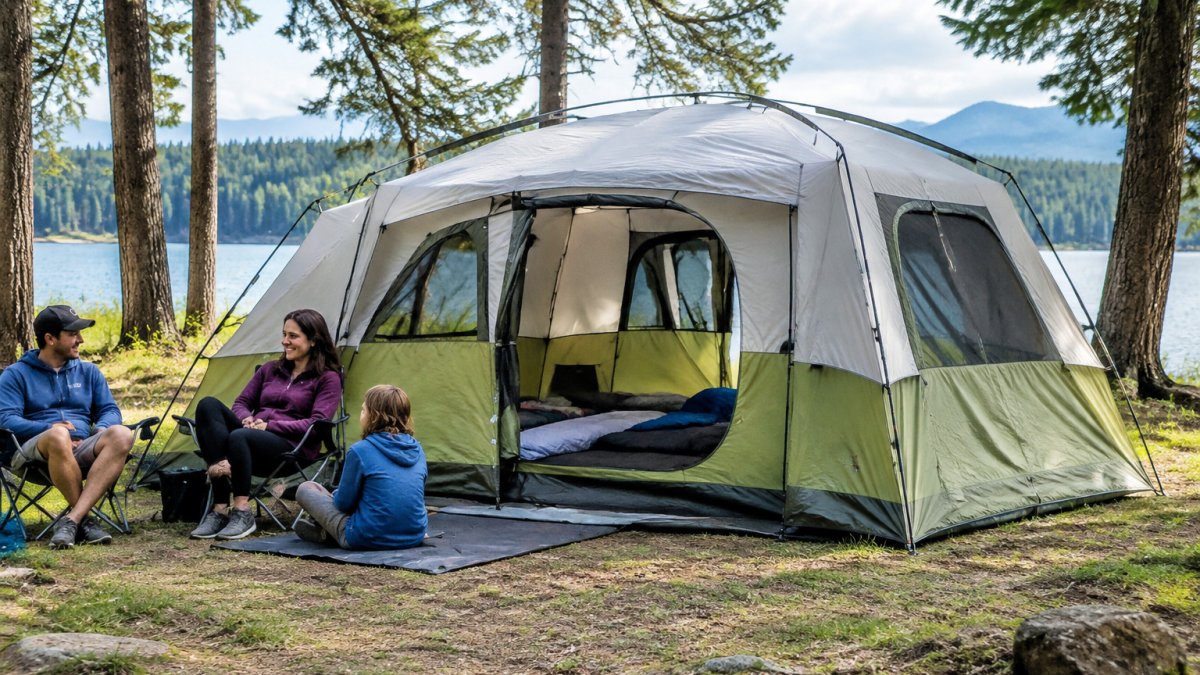
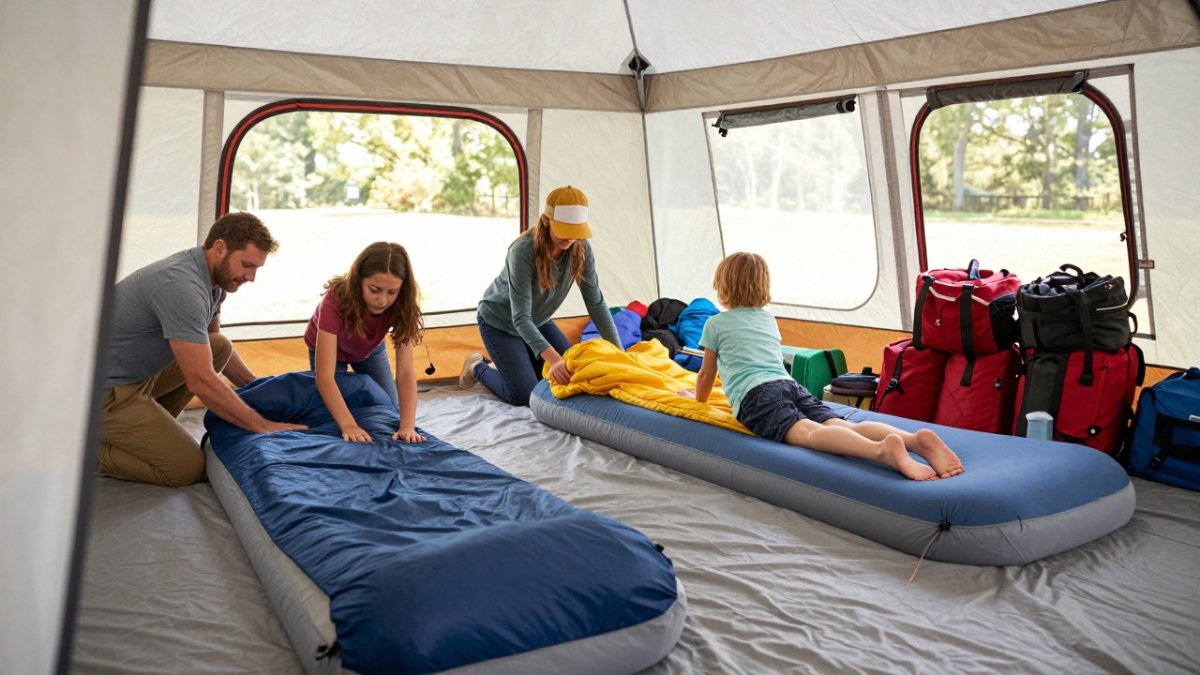
A 5 person tent with rooms solves the space problem differently: instead of more floor, it divides what you have. A room divider creates a sleeping side and a living or gear side, keeping muddy shoes and duffels off the sleeping area. But a divider only helps if the floor plan matches how five people actually sleep, sit, and move.
Room Dividers, Vestibules, and Gear Storage
Three features do the heavy lifting:
- Room divider: splits the interior into two sleeping areas, giving parents privacy and kids their own zone
- Vestibule: covered entry space for wet boots and jackets before anyone steps inside
- Gear loft or pockets: keeps headlamps, snacks, and clothes off the floor
A divider is not a wall. It is a fabric panel, and kids will push through it. What it does well is define territory and block light, which matters at bedtime.
Floor Plans for Five: Three Layouts That Actually Work
Manufacturer capacity ratings count bodies, not sleeping pads, bags, and the walking path between them. For a family of five, the usable layout usually falls into one of three patterns.
Layout 1: Two-zone divider with a center aisle. A rectangular cabin tent with a divider across the middle can split the floor into two sleeping areas with a center aisle. Put two adults on one side on two 20-by-72-inch pads, and three children on the other on three 20-by-66-inch pads or bags. That leaves a narrow center aisle for dressing and middle-of-the-night trips.
Layout 2: Side-by-side sleeping bays. Some tents use divider panels to create separate zones for parents, children, and gear.
Layout 3: Open-plan with defined gear zone. A dome or cabin tent without a divider can still work for five if you assign the back third of the floor to gear and the front two-thirds to sleeping.
Sleeping Zones, Bags, and Walking Space
Do the pad math before you trust a floor plan. A standard adult sleeping pad is about 20 inches wide and 72 inches long, or roughly 10 square feet per pad once you account for the rounded corners.
The rest of the floor is where the layout succeeds or fails.
Watch out: a divider that runs door-to-door can turn the entry into a sleeping zone, so check where the door sits relative to the panel before you commit to a layout.
Matching the Layout to Your Kids' Ages
Ages change the plan more than tent specs do. With a toddler or preschooler, keep the youngest sleeper between an adult and the tent wall, and leave a clear pad-width strip beside the door for the cot or mat.
A room divider is a tool, not a guarantee. The families who end up comfortable sketch the pad layout on paper before the trip, measure the tent floor against that sketch, and pick the floor plan that leaves a real walking path rather than a gap.
5 Person Tent Waterproof: Rainfly, Seams, and Wind Resistance
A waterproof family tent for real weather typically benefits from a full-coverage rainfly, taped seams, and a bathtub-style floor. Those features help determine how well a tent handles a storm.
Look for a hydrostatic head rating on the fly and floor, usually printed as millimeters. Higher numbers resist more water pressure.
Wind resistance comes from geometry and guy lines, not fabric alone. Dome and cabin shapes are generally designed to handle wind when staked properly. Use every guy-out point the tent provides, and angle stakes away from the tent body.
Large Camping Tents With Rooms: Cabin, Dome, and Inflatable Options
Large camping tents with rooms fall into three families, and the right pick depends on how you camp rather than which looks best in photos.
| Type | Setup | Standing Height | Best For |
|---|---|---|---|
| Cabin tent | 10-20 min, poles | Near full height | Families who want room to stand and move |
| Dome tent | 5-10 min, poles | Sloped, lower edges | Windy sites, quick weekend trips |
| Inflatable tent | 5-15 min, pump | Varies by model | One adult pitching alone with kids nearby |
Cabin tents give the most usable interior space and the easiest movement for five people. Dome tents trade some headroom for stability in wind. Inflatable air tents use air beams instead of poles, which is genuinely faster with children underfoot, though you need a pump and a backup plan if a beam leaks.
If you want a canvas option with serious room, our 4 seasons canvas bell tent fits five to seven people with a peak height that lets adults stand. Families who prefer a cabin layout can look at the 6 person instant cabin tent, and if pump-up pitching appeals to you, the inflatable cabin tent with mesh windows is the air-beam route.
Setup Time and Difficulty With Kids in Tow
Setup difficulty with children present is underrated. A tent that takes one adult twenty minutes becomes forty when a toddler is unzipping things.
- Practice a full pitch in the yard before the trip
- Assign each child a job: stakes, pads, bags
- Choose instant or inflatable designs if you will often arrive near dark
- Keep the mallet and pump in one labeled bin
Setup time by tent type
Packed Size, Weight, and Transport for Car Camping
Packed size and weight matter less for car camping than backpacking, but they still decide whether a tent fits your trunk alongside five sleeping bags and a cooler. A roomy family tent is often the single largest item in the vehicle, and the difference between a 28-inch and a 40-inch packed length can be the difference between fitting across the trunk and blocking the rear window.
What Packed Dimensions Actually Look Like
Family tents in the six- to eight-person range typically pack into a long duffel.
Those ranges are wide because materials and pole count drive them. A tent with fiberglass poles and a partial fly is lighter than the same floor plan with aluminum poles, a full rainfly, and blackout fabric.
Measure your vehicle before you order. A typical sedan trunk is about 15 cubic feet, an SUV behind the second row is roughly 35 to 40 cubic feet, and a minivan with the third row folded is closer to 80 cubic feet.
Weight, Carry, and the Walk From the Car
Packed weight matters most in the first and last 50 feet. A 50-pound tent is manageable for two adults carrying it by the duffel handles, awkward for one adult, and a genuine problem if the campsite is a quarter mile from the parking area.
Split the load. Put the tent body and fly in the duffel, carry poles in their own bag, and send a child ahead with the stakes and mallet in a small bin.
Packing the Vehicle for a Family of Five
A workable order for a five-person car camp:
- Load sleeping bags, pads, and the cooler first, low and forward
- Put the tent duffel last, near the tailgate, so it comes out first at camp
- Keep poles in their own bag so nothing bends under cooler weight
- Strap or wedge the duffel so it cannot slide into passengers during braking
Watch out: never store a tent compressed long-term between trips. Loosely stuff it into a breathable storage bag so the fabric and coatings are not creased along the same folds for months.
Packed Size Trade-Offs by Tent Type
Cabin tents trade packed length for standing height; the long pole segments are what make the walls vertical, and they are also what makes the duffel long. Dome tents pack shorter and lighter for the same capacity but give up headroom at the edges. Inflatable tents pack into a shorter, wider bag and pitch without long poles, but you need a pump that fits the valve and a plan for a leaking beam.
Ventilation, Condensation, and Hot-Weather Comfort
Condensation is the quiet comfort killer in family tents. Five people exhale a surprising amount of moisture overnight, and a sealed tent turns that into damp sleeping bags by morning.
Mesh panels and two-way vents fix most of it. Look for large mesh windows with zip covers so you can open up in heat and close down in cold.
Hot-weather comfort is a separate problem. A rechargeable tent ceiling fan with light moves air where five people are sleeping, and a waterproof rechargeable tent lantern keeps lighting handled without hunting for batteries in the dark.
Choosing Your Roomy Family Tent at Get Camping Store
The right roomy tent for a family of five comes down to three numbers: floor area above 100 square feet, a peak height you can stand in, and a waterproof fly with taped seams. Match those to how you camp, cabin for space or dome for wind, and the rest is detail.
At Get Camping Store, we stock family tents with the specs printed plainly so you can compare floor area and peak height without guesswork. Our online store makes it straightforward to gear up in one order, and you can check current prices on our website.
Five people in one tent is a tight equation, and the wrong pick shows up on night one. Get Camping Store carries spacious cabin, dome, inflatable, and canvas tents with honest specs, affordable pricing, and a support team that helps you match capacity to your family before you buy. Get started with Get Camping Store and pitch a tent your whole family fits inside.
Frequently Asked Questions
Is a five-person tent roomy enough for a family of five?
Usually not. Listed sleeping capacity assumes people lying shoulder to shoulder with no gear, so a five-person tent fits five sleeping bags and little else. For two adults and three children plus bags and coolers, look for a tent with a larger listed capacity and compare the floor dimensions on each product listing. Measure your air mattresses before buying and compare them to the tent's floor dimensions.
How big of a tent do I need for five people?
Plan on roughly 30 to 35 square feet of floor area per person when you want real comfort, which puts a family of five at 150 to 175 square feet. That usually means a six-person or larger tent. Also check peak height: 72 inches or more lets most adults stand or crouch comfortably, which matters for dressing kids and changing clothes on a rainy morning.
Should a family of five choose a tent with separate rooms?
A 5 person tent with rooms helps when kids go to bed earlier than adults or when you want a clean sleeping zone separate from gear. Room dividers add privacy but eat a little floor space, so check the dimensions of each room rather than the total. For shorter weekend trips, a single large room with a big vestibule often works just as well and pitches faster.
What should I look for in a waterproof family tent?
Check the rainfly coverage first: a full-coverage fly that reaches near the ground sheds rain far better than a partial cap. Look for taped or sealed seams, bathtub-style floors with raised edges, and polyester fabric with a listed hydrostatic head rating. Mesh panels high on the walls plus low vents reduce condensation, which is often what makes a tent feel damp after a cold night.