 blog
Best Survival Gear for Emergencies: Build a Kit That Works
Last Updated: November 26, 2026
Quick Summary
The best survival gear for emergencies is the gear you already own, packed, checked, and ready to grab, starting with water, shelter, and light. A survival kit should keep you fed, warm, informed, and safe for at least 72 hours. Build the core first, then adjust for home, car, and go-bag scenarios.
- Store at least one gallon of water per person per day for three days, about 12 gallons for a family of four.
- Choose nonperishable, no-cook food and check shelf life twice a year.
- A crank and solar emergency radio works when batteries die.
- Don't pack one bag for everything; keep heavy water and shelter gear at home.
- Test your gear quarterly and write the check date on the container lid.
Table of Contents
- Best Survival Gear for Emergencies: What to Pack First
- Emergency Survival Kit Checklist: Core Gear by Scenario
- 72-Hour Emergency Kit: Water, Food, and Power Resilience
- Budget Tiers and Cost-Per-Person Planning
- Maintenance, Expiration, and Rotation Schedule
- Accessibility, Children, Pets, and Medical Needs
- Frequently Asked Questions
Best Survival Gear for Emergencies: What to Pack First
When a storm knocks out power or a road closes, the best survival gear for emergencies is the gear you already own, packed, checked, and ready to grab. Start with water, shelter, and light.
A survival kit is a pre-packed set of essential supplies that keeps you fed, warm, informed, and safe for at least 72 hours. The Ready.gov emergency supply guidance puts water and food at the top of that list for good reason. Most people buy gear in the wrong order, a fancy knife first, water storage forgotten.
Emergency Survival Kit Checklist: Core Gear by Scenario
A home kit, car kit, and go-bag each solve a different problem: build the core first, then adjust.
| Scenario | Priority Additions | Skip or Scale Back |
|---|---|---|
| Home emergency kit | Water storage, sanitation, blankets | Lightweight portability |
| Car emergency kit essentials | Jumper cables, warm layers, signaling | Bulk food |
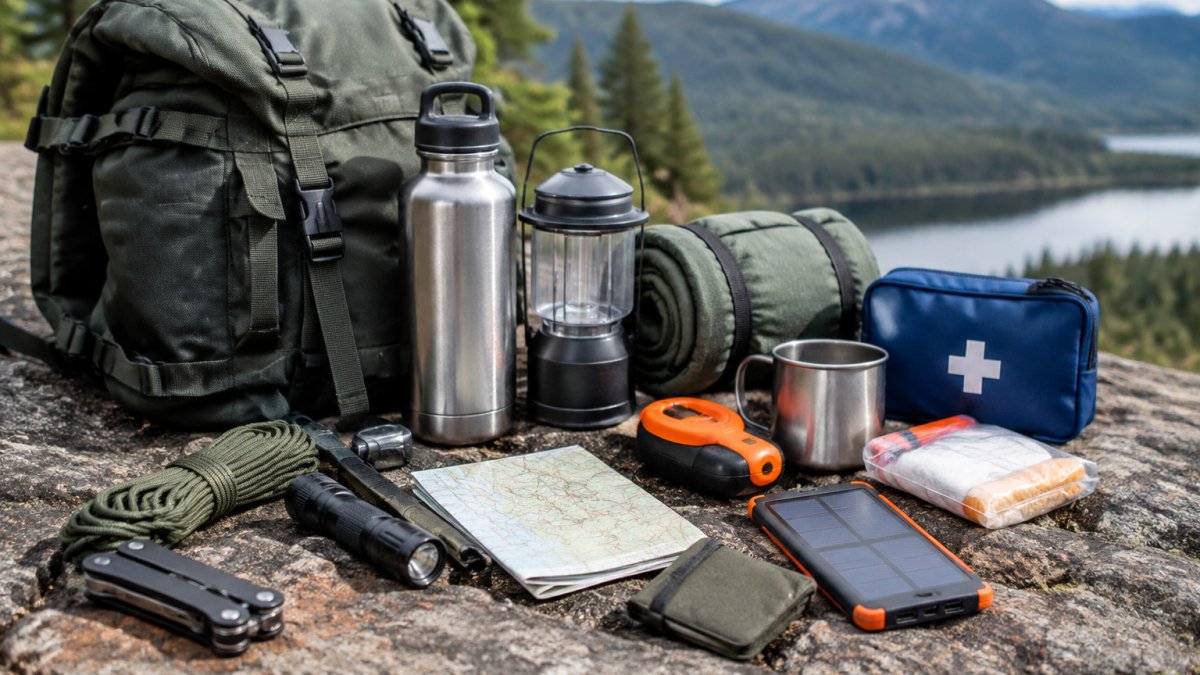
| Go-bag / bug-out bag | Paracord, fire starter, multi-tool | Heavy water containers |
Don't pack one bag for everything. For shelter gear, an emergency tube tent shelter for two people is easy to add to a kit. A grab-and-go bag should be light enough to carry on foot; keep heavy water and shelter gear at home. Our 125-piece survival kit covers the small tools most people forget; our camping and hiking survival kit adds depth for longer trips.
72-Hour Emergency Kit: Water, Food, and Power Resilience
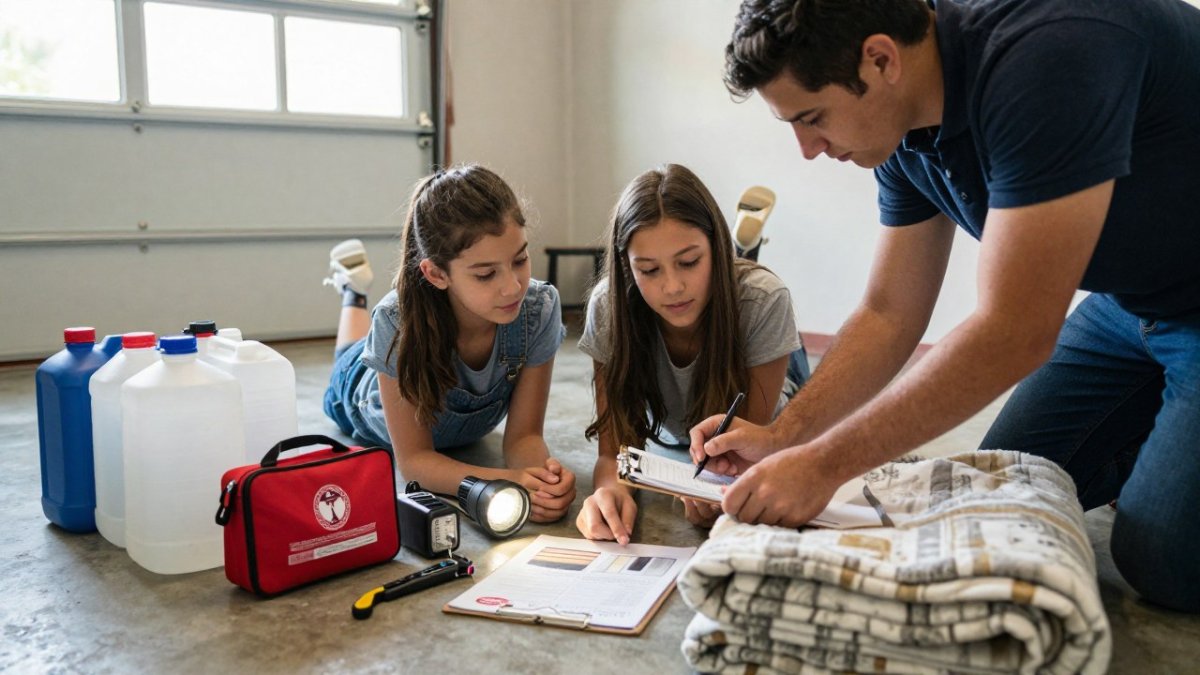
Water is where most kits fail. FEMA and Ready.gov recommend at least one gallon per person per day for three days, roughly 12 gallons for a family of four. Store water in food-grade containers and rotate it. Choose nonperishable, no-cook food and check shelf life twice a year. A crank and solar emergency radio works when batteries die, and a portable power station runs small devices and lights. Test your gear quarterly.
Budget Tiers and Cost-Per-Person Planning
Build in tiers and spread the cost across a few months. Pricing depends on quantity, timing, and delivery. Visit Get Camping Store's website for current prices or a quote.
Maintenance, Expiration, and Rotation Schedule
Gear that sits untouched quietly fails, set a rotation schedule. A calendar reminder handles most of this; write the check date on the container lid.
Accessibility, Children, Pets, and Medical Needs
Add prescription copies, spare glasses, and infant or elder supplies where relevant, plus pet food and a leash if you have animals. Keep a small duplicate go-bag for kids with a whistle, a light, and a comfort item.
Emergencies rarely announce themselves, and the families who fare best are the ones who prepared on an ordinary weekend. Get Camping Store carries the core survival gear, tents, and first-aid supplies to build a kit that actually works, backed by years of outdoor experience and affordable pricing. Start with water, shelter, and light, then add power and signaling gear as your budget allows. Get started with Get Camping Store and build a kit your family can rely on.
Frequently Asked Questions
What are the 5 most important survival items to have?
Start with water (at least 1 gallon per person per day), nonperishable food, a first-aid kit, a reliable flashlight or headlamp with extra batteries, and a multi-tool. These five cover hydration, nutrition, medical needs, visibility, and basic repairs. Add a whistle and emergency blanket for signaling and warmth. If you build a 72-hour emergency kit around these essentials, you cover the most common gaps in a disaster.
What should be in a 72-hour emergency kit?
A 72-hour emergency kit should include three days of water and nonperishable food per person, a first-aid kit with medications, a flashlight or headlamp with spare batteries, a battery-powered or hand-crank radio, a whistle, a multi-tool, duct tape, paracord, work gloves, rain gear, sturdy shoes, a blanket, an N95 mask, and sanitation supplies. Pack a power bank for phones. Store the kit in a grab-and-go bag near an exit. Check expiration dates twice a year and rotate food and water.
How much food and water should I store for an emergency?
Store at least 1 gallon of drinking water per person per day for three days, so a family of four needs 12 gallons. For food, plan three days of nonperishable items: canned goods, energy bars, dried fruit, and nuts. If space allows, extend to two weeks. Include a manual can opener and water purification tablets in case stored water runs out. Rotate your stock every six months and check shelf life labels.