 blog
How to Find Affordable Hiking Backpacks Under 100 Dollars
Last Updated: November 24, 2026
Quick Summary
Finding affordable hiking backpacks under 100 dollars starts with matching capacity in liters to your trip length, then confirming the pack's torso range fits your measured torso length. For day hikes, look for 20L to 30L with a padded hip belt and ventilated back panel, and for overnights a 35L to 40L pack paired with a compact sleep system.
- Measure your torso length at home with a flexible tape before buying any pack.
- A 15-25L pack suits day hikes of two to four hours.
- Overnight loads above roughly 25 pounds expose weak stitching and thin frames fast.
- Most sub-$100 packs are water resistant, not waterproof, so add a rain cover or pack liner.
- Ripstop nylon in the 200D to 400D range resists trail abrasion without much weight.
Table of Contents
- What to Look For in Affordable Hiking Backpacks Under 100 Dollars
- How to Choose a Budget Hiking Backpack
- The Best Budget Day Backpack for Hiking
- Women's Affordable Hiking Backpacks Under 100 Dollars
- Hiking Backpacks Under $100 for Overnight Trips
- Value, Durability, and Weather Protection on a Budget
- Frequently Asked Questions
What to Look For in Affordable Hiking Backpacks Under 100 Dollars
Finding affordable hiking backpacks under 100 dollars starts with three numbers: capacity in liters, torso length in inches, and total pack weight. Most budget packs fail on one of these three points, not on price.
The U.S. Forest Service guide to safe hiking puts basic trail preparedness ahead of gear brand names, and that ordering is correct. A well-fitted budget pack beats an expensive one that rides wrong.
Capacity and Volume: Liters by Trip Length
Match liters to trip length before anything else:
| Trip Type | Capacity | Notes |
|---|---|---|
| Day hike, 2-4 hours | 15-25L | Water, layers, snacks |
| Full day hike | 25-35L | Adds rain shell, lunch, first aid |
| Overnight | 35-50L | Sleep system, stove, food |
| Multi-day trek | 50L+ | Usually above budget range |
Buying too much volume is the most common budget mistake. A 50L pack on a four-hour hike carries dead space and shifts weight.
Fit, Torso Length, and Load Support
Fit decides comfort more than price does. Measure from the bony bump at the base of your neck to the top of your hip bones, then compare that number to the pack's torso range. Shoulder straps should wrap the collarbone without gaps. The hip belt must sit on the hip bones, not the stomach, because that is where most of the load transfers.
How to Choose a Budget Hiking Backpack
Work through these steps before you buy:
- Measure your torso length at home with a flexible tape
- Confirm the pack lists a torso range, not just "adjustable"
- Check that the hip belt is padded and wide enough to carry load
- Look for a ventilated back panel if you hike in heat
- Count storage compartments: main, lid, and one quick-access pocket is enough
- Verify water bottle pockets fit a full 1L bottle
- Weigh the empty pack; ultralight models trade durability for grams
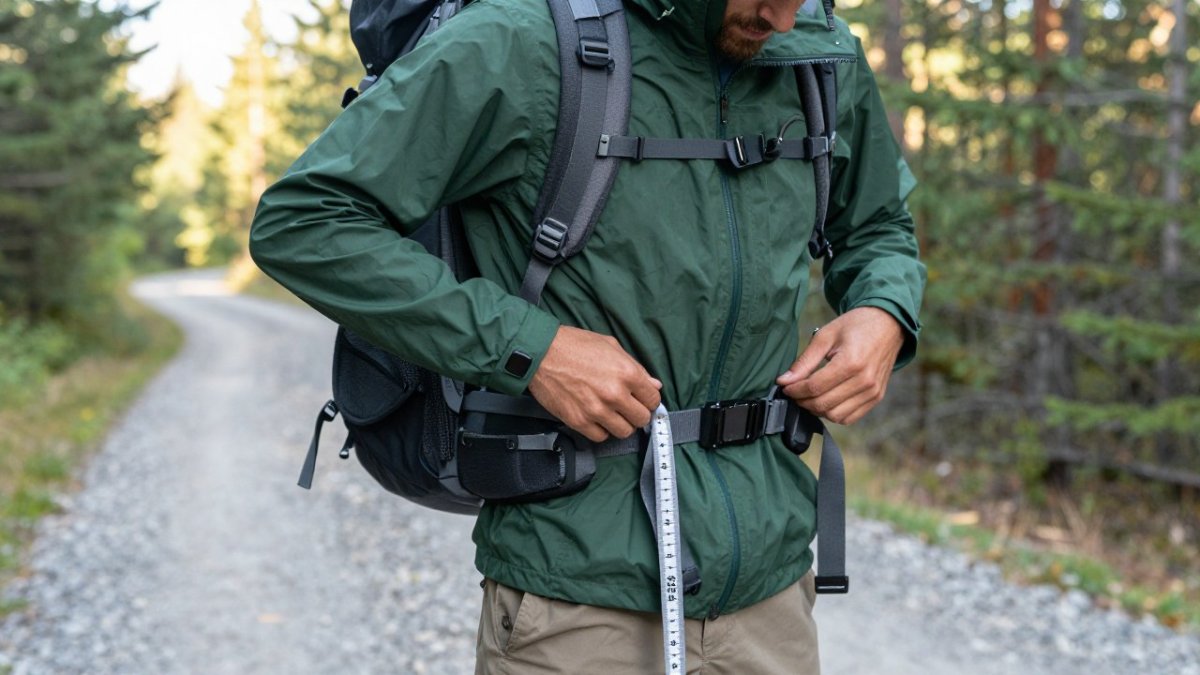
Watch out: a pack with a fixed torso length that does not match your measurement will rub your shoulders raw within the first mile, and no amount of strap tightening fixes it.
The Best Budget Day Backpack for Hiking
For most day hikes, the best budget day backpack for hiking lands between 20L and 30L with a padded hip belt and a ventilated back panel. Two options from our own lineup cover that ground well.
The lightweight foldable nylon hiking backpack packs down small and suits travelers who want a pack that doubles as a carry-on. It is the right call for short day hikes and commuting.
For a structured load, the men's 30L compact outdoor hiking backpack adds real load support with adjustable straps and multiple compartments. Best for: full-day hikes with layers and lunch. Skip if: you need overnight volume.
Women's Affordable Hiking Backpacks Under 100 Dollars
Women's affordable hiking backpacks under 100 dollars need a shorter torso range and narrower shoulder straps, and those two specs matter more than any colorway. A pack built on a men's frame will ride high on a shorter torso and push the hip belt off the hips.
Look for a stated torso range starting around 14 inches, a hip belt that curves rather than sits flat, and sternum strap adjustability. If a listing only says "unisex," measure carefully before ordering.
Hiking Backpacks Under $100 for Overnight Trips
Overnight trips push the budget hardest, because 35L to 50L packs carry more structure and more material. The realistic path at this price is a 35L to 40L pack paired with a compact sleep system, not a 50L expedition hauler. Above roughly 40L, sub-$100 packs tend to use thinner frames and lighter stitching, and the load limit drops fast.
Match volume to the trip you actually take
| Trip type | Capacity | What fits |
|---|---|---|
| One night, warm weather | 35-40L | Compact sleeping bag, pad, stove, 1-2 days food |
| One night, cold weather | 40-50L | Bulkier bag, extra layers, larger fuel |
| Two nights | 45-55L | Usually above the budget sweet spot |
| Multi-day trek | 50L+ | Above budget range for most hikers |
A 36L pack handles one night with a compact sleep system strapped outside, which is the most common budget overnight setup. Strapping gear outside the main compartment works, but it shifts the load away from your back and makes the pack feel heavier than the scale says.
Load limits and structure
Overnight loads above roughly 25 pounds expose weak stitching and thin frames fast. Check three points before you commit: the seam where the shoulder harness meets the pack body, the hip-belt attachment, and the bottom panel. A pack with a real framesheet or a stiff foam back panel transfers load to the hips; a frameless pack at this price turns into a sack of pressure points once you pass about 20 pounds.
Our water-resistant 36L hiking daypack is built for the one-night role, with improved zippers and extra padding at the contact points. Best for: warm-weather overnights with a compact bag. Skip if: you need to carry more than about 25 pounds or a bulky winter bag.
Packing to stay inside the volume
Volume disappears faster than expected. A sleeping bag and pad eat 12-15L, food and water another 5-8L, and layers and cook kit the rest. Compression stuff sacks and a pack liner let you squeeze a bag down and keep the load close to your back. For hydration, a 2L water bladder with a suction nozzle fits most budget packs and keeps you drinking without stopping. For load support, a Molle hiking backpack with adjustable straps lets you lash gear outside the main compartment when the interior runs out.
Watch out: overnight loads above roughly 25 pounds can expose weak stitching, so check seam quality before you commit.
Value, Durability, and Weather Protection on a Budget
Durability on a budget comes from three things: fabric denier, zipper quality, and seam construction. Ripstop nylon in the 200D to 400D range resists trail abrasion without adding much weight. Coil zippers outlast molded ones at this price point.
Weather protection is where budget packs cut corners. Most sub-$100 packs are water resistant, not waterproof, so a separate rain cover or a pack liner is money well spent. For hydration, a 2L water bladder with a suction nozzle fits most budget packs and keeps you drinking without stopping. For load support, a Molle hiking backpack with adjustable straps lets you lash gear outside the main compartment.
The Leave No Trace principles are worth reading before any overnight trip, since packing less gear is the cheapest weight savings available.
Budget packs fail for predictable reasons: wrong torso length, too much volume, and no rain protection. Get Camping Store stocks hiking packs, hydration gear, and camping essentials at prices built for weekend hikers, with a fast online shopping experience and a customer service team that will help you match a pack to your trip. Get started with Get Camping Store and gear up for your next trail day without overspending.
Frequently Asked Questions
Can you find a comfortable hiking backpack under $100?
Yes, comfort under $100 comes down to fit rather than price. Look for an adjustable torso length, padded shoulder straps, a sternum strap, and a hip belt that transfers weight to your hips. Measure your torso from the C7 vertebra to the top of your hip bones before shopping. A pack that matches your torso length will carry more comfortably than a pricier one that doesn't fit.
Are hiking backpacks under $100 suitable for overnight trips?
Some are, if you match capacity to the trip. For one night, look for 40 to 50 liters, which holds a sleeping bag, pad, food, and layers. Multi-day treks need 50 to 65 liters. Check that the pack has a hip belt rated for heavier loads and compression straps to keep gear stable. Ultralight packers can often manage with less volume than the numbers suggest.
What features should I look for in a budget hiking backpack?
Prioritize load support and organization over extras. A padded hip belt, adjustable shoulder straps, and a ventilated back panel matter more than a dozen pockets. Water bottle pockets, a quick-access front pocket, and a rain cover or water-resistant fabric are worth having. Hydration bladder compatibility is useful for day hikes. Skip features you won't use, since they add weight and cost without improving the carry.
How much should you pay for a hiking backpack?
You do not need to spend a lot for a weekend day pack. Fit matters more than price when choosing a day pack. Spend more only when your trips get longer, your loads get heavier, or you need specific features like a women's-specific harness or a larger overnight volume. Compare capacity, materials, and strap adjustability rather than assuming a higher price means better durability.
